

Textile EPR establishes rules and responsibilities, but without an organized recycling supply chain, materials are collected without being valorized. From collection to mechanical and chemical recycling, all the way to marketable outputs: how does textile circularity really work, and how does a brand fit into these flows?
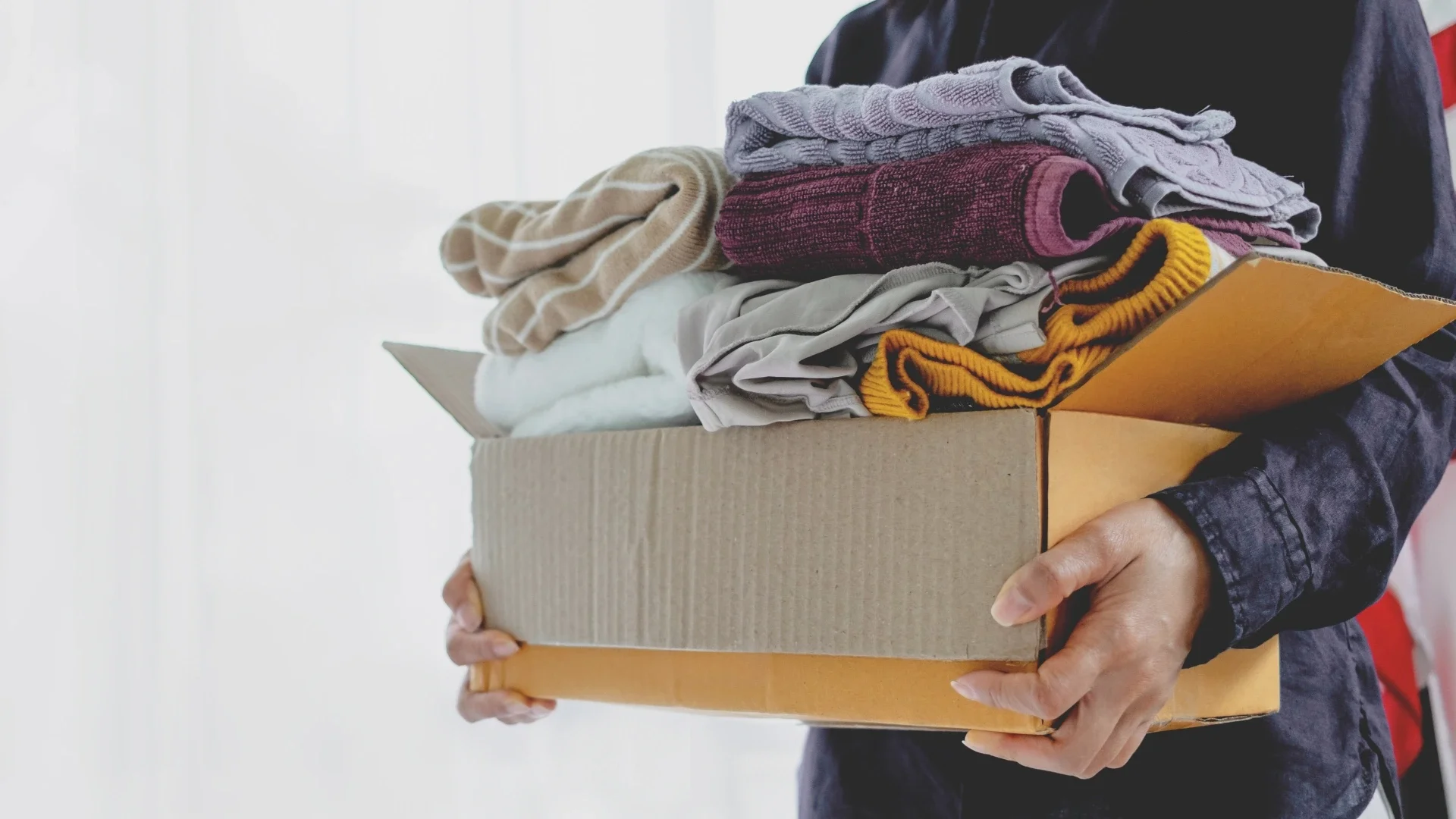
In the textile industry, EPR (Extended Producer Responsibility) shifts the burden of managing the end-of-life of products placed on the market to manufacturers. But EPR, on its own, does not recycle anything: it establishes rules, responsibilities, and financial resources.
Recycling, on the other hand, is the operational pillar that makes that framework applicable, transforming waste and scrap into reusable materials.
Without an organized, scalable recycling system with industrial outlets, the risk is clear: waste is collected, but not recycled. And when waste isn’t recycled, costs rise, inefficiencies increase, and the likelihood of it ending up in incinerators or landfills grows.
This is where an industrial “ Producer Responsibility Organization ” like Rematrix makes a difference: not just compliance, but the development and stabilization of the supply chain (collection, sorting, mechanical/chemical recycling, output quality), because without industry, there can be no measurable circularity.
Phase 1 – Collection: Quantity and quality matter most of all
Harvesting is the first step and determines the quality of the material that will enter the subsequent processes. The most important channels today are:
Urban waste collection (municipal containers and waste streams): potentially high volumes, but often inconsistent quality and contamination.
Sales locations and retail (in-store take-back): more controllable quality, the ability to communicate with consumers, and better management of the selection process.
Brand-specific take-back programs (e.g., returns or pickups tied to a new purchase): higher “visibility,” better data, and more effective segmentation between reuse and recycling.
Social partners and circular economy stakeholders: they often play a decisive role in initial sorting and local reuse; the challenge is to standardize and scale up these efforts.
For brands and retailers, choosing a channel is not just a matter of logistics—it’s a strategy for ensuring the quality of the feedstock. Joining a “ Producer Responsibility Organization ” such as Rematrix provides access to established collection networks with established operating rules and traceability, thereby reducing time and organizational burdens.
Phase 2 – Selection and Preparation: This is where the yield of the production line is determined
After harvesting, the most critical (and often underestimated) step is sorting:
separation of reusable items from recyclables;
removal of contaminants and non-textile components (zippers, buttons, accessories);
Preparation of the material (cutting, cleaning when necessary, homogenization).
This phase is one of the main cost drivers, but it is also what determines the quality of the outputs: without proper sorting and preparation, recycling loses efficiency and value.
Phase 3 – Mechanical Recycling: Reliable, but with Quality Limitations
Mechanical recycling breaks down textiles into shorter fibers through physical processes (cutting, opening, carding), without altering the chemical structure of the fibers.
Benefits
well-established and relatively affordable technology
fast turnaround times
Good compatibility with homogeneous flows
Limitations
fiber degradation (shorter, less durable)
It is often necessary to blend it with virgin fiber for medium- to high-quality textile applications.
requires input that is as clean and uniform as possible
The outputs can be used to produce yarns (in blends), nonwovens, and technical applications (construction, automotive, and upholstery).
Phase 4 – Chemical Recycling: High Quality, Greater Complexity
Chemical recycling works at the molecular level: it selectively depolymerizes or dissolves polymers to produce monomers or intermediates, which can then be repolymerized into fibers with properties similar to those of virgin material.
It is particularly relevant for synthetic fibers (e.g., polyester) and, in some cases, makes it possible to manage complex blends by adjusting the synthetic component.
Strengths
High-quality output, also suitable for high-end applications;
potential for more “closed” (fiber-to-fiber) cycles.
Challenges
energy costs and consumption that are even higher than those of the mechanical system;
the need for dedicated data flows, continuity, and input standards.
To be truly effective, chemical recycling requires dedicated supply chains and industrial partnerships: it is a matter of supply as well as technology.
Focus – Footwear and Accessories: The Problem Is the Multi-Component Nature
Shoes and accessories are complex because they consist of multiple layers: sole, upper, midsole, reinforcements, linings, and metal components. A different approach is needed:
disassembly/breakdown (often still involving a significant amount of manual labor)
Separation by material type
Value creation for dedicated supply chains:
rubber: granules or regeneration processes (e.g., devulcanization) for new applications;
leather: recovery and reuse in accessories or specialized recycling;
metals: separation and recycling;
Home textiles: trends similar to those in apparel.
This is where eco-design also comes into play: the more a product is designed to be separated, the higher the recovery rate and the lower the treatment cost.
Output: What Actually "Comes Out" of Recycling
A supply chain is sustainable only if it produces marketable outputs with consistent quality and specifications:
recycled fibers (mechanical): short fibers in bales, often used for blends and technical applications;
regenerated fibers / monomers (chemical): high quality, fiber-to-fiber potential;
rubber granules, reclaimed leather, metals: for industrial applications or reuse in specific sectors.
To make these outputs “market-ready,” standards, testing, certifications, and a consistent supply are needed. This is one of the key elements of an industrial EPR.
How a company becomes part of these flows
For a brand or retailer, access to the supply chain involves three levels:
Contract: Participation in an EPR Producer Responsibility Organization or direct agreements with specialized operators: volumes, quality criteria, operational responsibilities, economic models.
Logistics: Collection at retail locations, transit warehouses, and transportation to sorting and recycling facilities. For extensive retail networks, consortium-based management is often the most efficient option.
Data and Traceability: Quantities, types, destinations, certificates, impact KPIs—without structured data, there is no auditability, no reporting, and no credibility.
Environmental benefits: yes, but they must be measurable and verifiable
Recycling helps prevent:
disposal (landfill/incineration),
demand for virgin raw materials,
Upstream impacts on resources and supply chains.
But the point today isn’t simply “saying that we recycle”—it’s proving it with numbers, methods, and audits.
For this reason, in an advanced EPR system, the benefits must be:
calculated using consistent methods,
tracked throughout the supply chain,
certifiable (including from an ESG perspective and in light of future DPP requirements).
In summary: EPR sets the rules; recycling creates value
The EPR strategy and textile recycling are inseparable:
The EPR defines financial responsibilities and objectives,
The recycling industry turns this requirement into tangible results,
Data makes everything measurable, auditable, and communicable.
Rematrix works precisely on this: building an “industrial” EPR system, where collection, sorting, recycling, and traceability become a stable supply chain—not just a regulatory requirement.