

In 2026, “sustainable” is no longer just a promise: it means measurable eco-design, traceability, and end-of-life accountability. With the introduction of Extended Producer Responsibility (EPR) for textiles in Italy, manufacturers are now responsible for post-consumer management, and design directly impacts future costs. Discover what it truly means to design for circularity.
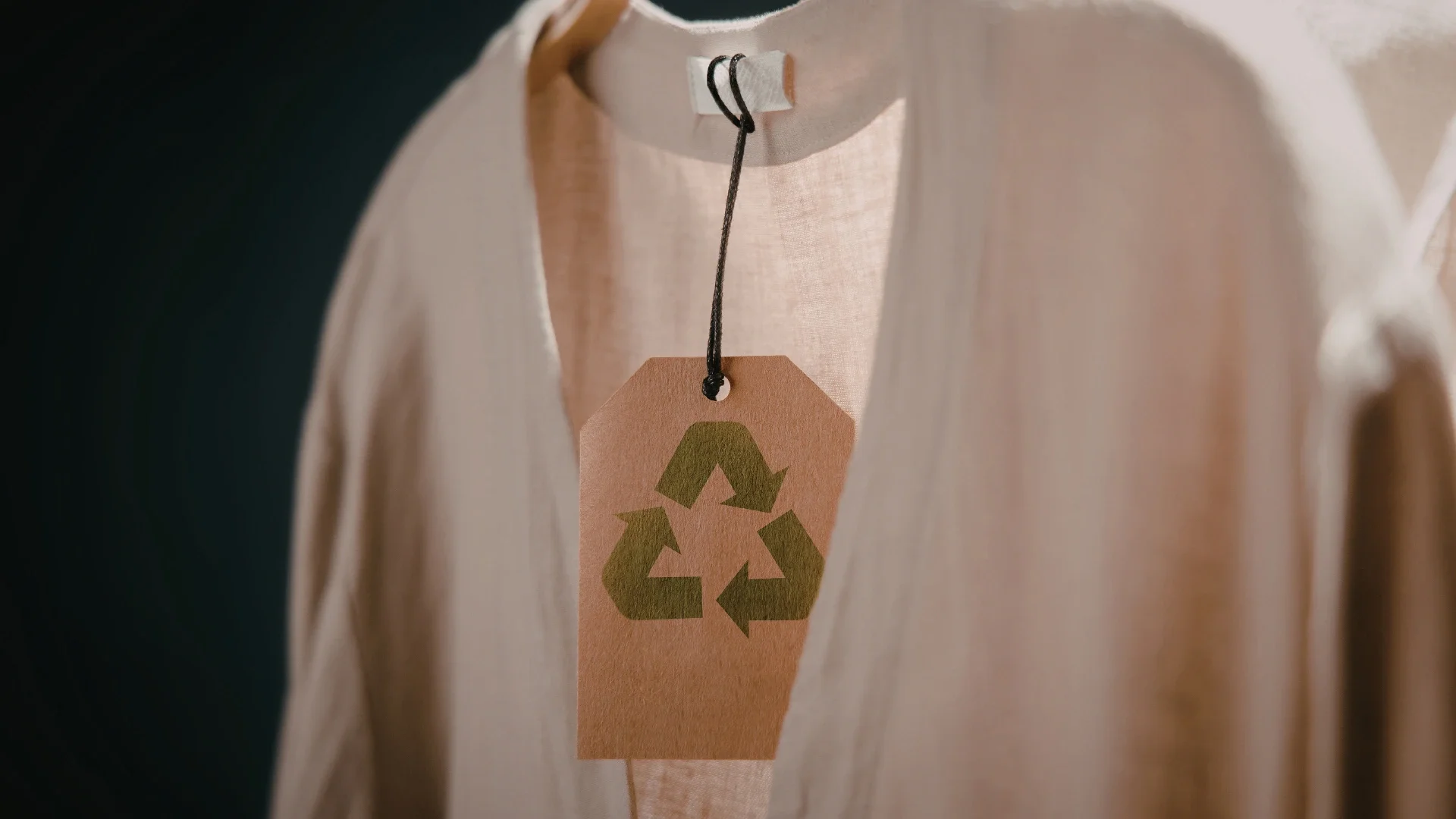
In the fashion industry, “sustainable” is one of the most frequently used—and most overused—words.
An organic fabric.
Plastic-free packaging.
A “green” capsule collection.
But today, with the Textile EPR and the Ecodesign Regulation (ESPR), sustainability is no longer just about communication: it’s about measurable design, traceability, and end-of-life responsibility.
That’s why, for Rematrix, talking about sustainable clothing means talking about:
design (ecodesign),
industrial infrastructure,
structured end-of-life care,
Integration with the ERP system.
Sustainability isn't about materials. It's about the life cycle.
An organic cotton garment that wears out after just a few seasons is not sustainable.
A synthetic garment that lasts for years and is truly recyclable can be even more so.
Sustainability is measured throughout the entire life cycle:
material sourcing
production process
Use and Care
end of life
And it is precisely when it comes to end-of-life care that the system is undergoing radical change.
With the introductionof the textile EPR in Italy (expected to become operational by 2026, in accordance with the Waste Framework Directive), manufacturers will become financially and operationally responsible for post-consumer waste.
It's not enough to design well. You have to design with an understanding of what will happen next.
Ecodesign: The First True Pillar
Ecodesign means incorporating environmental criteria right from the design phase, not after the fact.
Three fundamental pillars:
1️⃣ Durability
A garment that lasts longer:
reduces the frequency of purchases
reduces the overall impact
reduces the amount of waste generated
Durability must be measured, not merely claimed.
ISO testing, certified wash cycles, colorfastness, structural strength.
Under the ESPR, these requirements will gradually become mandatory.
2️⃣ Repairability
A garment designed to be repaired extends its useful life.
This means:
replaceable components
accessible seams
standardized accessories
repair instructions
Repairability isn't just a matter of ethics—it's a key factor in building customer loyalty.
3️⃣ Recyclability
This is where the industrial hub comes into play.
✅ Single-material products or simple combinations drastically increase end-of-life value.
❌ Complex fiber blends make recycling difficult and expensive.
✅ A garment made of 100% cotton or 100% polyester can be immediately enhanced.
❌ A garment made of 5 different fibers becomes a cost.
In the future EPR system, this will also make a difference financially.
The Connection Between Ecodesign and EPR
Textile EPR applies to post-consumer waste, but its environmental impact will not be neutral over time.
The European principle of eco-modulation provides that:
products that are easier to recycle should cost less;
Those with problematic products should pay more.
This means that the design directly affects the EPR cost.
A brand that:
simplify the compositions,
increases certified durability,
makes disassembly easier,
It is not only improving sustainability; it is also optimizing its future cost structure.
Responsible Sourcing: Beyond Green Claims
Biological or recycled materials are not automatically sustainable.
A garment made from 50% recycled material but with poor performance reduces its lifespan and negates the environmental benefit.
You will need:
certifications (GOTS, RCS, GRS)
traceability
Credible LCAs
Consistency in quality and recycled content throughout the entire supply chain
A QR code that provides information about a product's composition, durability, and end-of-life is more credible than any slogan.
End-of-life care: the often-overlooked aspect
As long as end-of-life management fell outside the brand’s responsibility, it could remain invisible.
With EPR, that is no longer the case.
Producers will fund:
collection of municipal textile waste
selection
reuse
recycling
This completely changes the perspective.
The garment doesn't end its life in the closet; it ends when it re-enters the industrial system.
And this is where Rematrix comes in.
Rematrix's Role in the Transition
Rematrix is an EPR- Producer Responsibility Organization s designed for industrial use.
It goes beyond administrative reporting; it builds infrastructure.
It means:
organize harvesting and sorting chains
recycle secondary raw materials
integrate digital traceability platforms
Assist companies in preparing for ecomodulation and DPP
Sustainability without infrastructure remains a theory.
Circularity without a system remains just marketing.
Digital Product Passport: The Next Level
The Ecodesign Regulation (ESPR) will introduce the Digital Product Passport.
Each garment must have:
complete composition
care instructions
impact data
end-of-life information
Those who structure their data today in a way that is consistent with EPR will be ready for DPP tomorrow, while those who do not will have to play catch-up.
The New Definition of Sustainable Clothing
For Rematrix, a garment is sustainable when:
It is designed to last
It can be repaired
It is recyclable
is traceable
It is integrated into a functioning ERP system
Sustainability isn't a collection; it's a business model.
And starting in 2026, it will also be a legal requirement.