

The European ban on the destruction of unsold textiles took effect on July 19, 2026, for large companies. *La Repubblica* has published an in-depth article on the topic, quoting Rematrix CEO Enrico Soffiati: unsold inventory is no longer a cost to be eliminated, but a resource that requires processes, traceability, and new industrial supply chains.
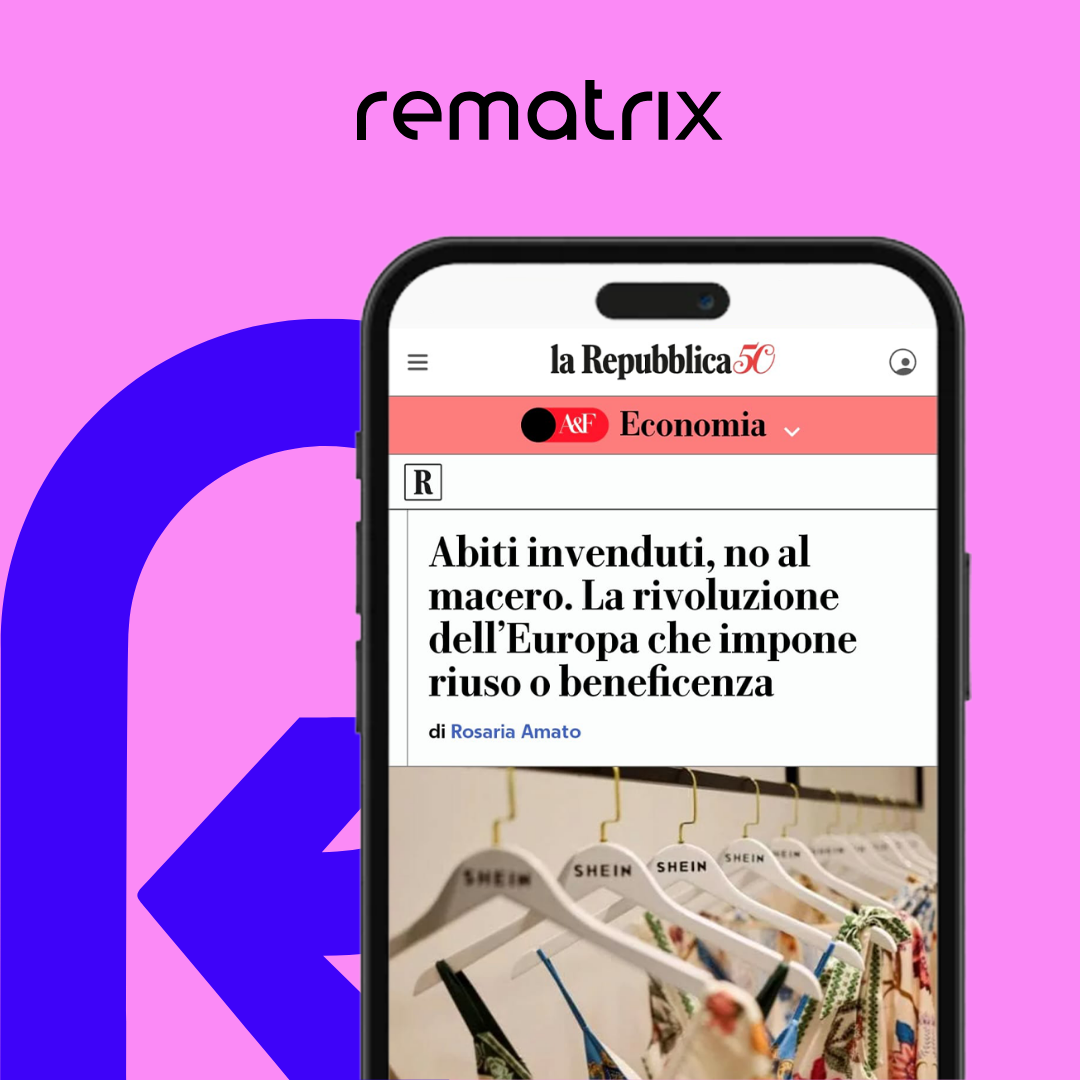
The regulatory change we’ve been reporting on for weeks has also made its way into the pages of *La Repubblica*.In an article by Rosaria Amato*, published on July 18, 2026, the newspaper featured an in-depth piece on the entry into force—effective Sunday, July 19, for large companies—of the European Regulation on the Eco-Sustainable Design of Products (ESPR), which prohibits the destruction of unsold clothing, shoes, and accessories.
La Repubblica reviews the data published by European institutions: each year in Europe, between 4 and 9 percent of unsold clothing is destroyed before it is ever worn, generating approximately 5.6 million metric tons of CO2. The textile sector produces a total of 12.6 million metric tons of waste per year, of which 5.2 million come from clothing and footwear—the equivalent of 12 kilograms of textile waste per person.
The article highlights how the new requirement does more than just prevent the indiscriminate disposal of garments; it is already pushing companies to rethink their production models, shifting toward more careful planning and smaller production runs. This shift in perspective was also discussed at the Financial Times Luxury Summit in Borgo Egnazia, where Giulia Iuticone of Heidrick & Struggles spoke alongside our CEO, Enrico Soffiati, who commented:
“For years, unsold inventory was viewed as a cost to be eliminated. Today, however, it has become a resource that requires processes, traceability, and new industrial supply chains. The real challenge is not to avoid destruction, but to develop credible and measurable alternatives.”
This is an important recognition of the work Rematrix carries out every day: helping textile companies turn a regulatory requirement into an industrial opportunity, through traceability, reuse and recycling supply chains, and support for ESG and CSRD reporting.
*The full article is available on the “la Repubblica” website for subscribers.